Luyue a contract manufacturer for Case, Takeuchi, Ray etc is famous for their K series mulchers. Built like tanks able to rip through any vegetation with ease an impressive piece of equipment. Bradco Paladin mulchers speak for themselves.
Select options
This product has multiple variants. The options may be chosen on the product page
1. Overview
Drum mulchers are heavy-duty forestry attachments that mount to skid steer loaders to grind trees, brush, and vegetation into mulch. Using a rotating cylindrical drum fitted with teeth, they deliver high torque and wide cutting paths, ideal for land clearing, fire prevention, and right-of-way maintenance.
Drum mulchers require a high-flow skid steer and auxiliary hydraulics capable of sustained pressure and volume.
4. Key Components
Component
Function
Drum Rotor
Main rotating element with attached teeth or hammers
Teeth (Fixed or Carbide)
Grinds wood and vegetation into mulch
Hydraulic Drive Motor
Converts skid steer hydraulic power into drum rotation
Housing / Shroud
Contains debris, protects internals, and directs mulched material
Push Bar / Tree Pusher
Helps control larger material into the drum
Rear Debris Curtain
Reduces debris throw behind the machine
Skid Shoes / Rollers
Maintain ground clearance and assist with height control
5. Drum & Tooth Types
5.1 Drum Types
Type
Description
Smooth Drum
Uniform surface, good for consistent mulching
Spiral / Staggered Drum
Teeth offset to improve cutting flow and reduce clogging
5.2 Tooth Types
Tooth Type
Best Use Case
Carbide Teeth
Dense brush, hard wood, rocky terrain
Steel Chisel Teeth
Softer vegetation, faster cutting
Reversible / Bolt-on Teeth
Ease of maintenance and longer lifespan
6. Operating Guidelines
6.1 Setup
Mount to skid steer using quick attach plate
Connect hydraulic hoses, including case drain line
Check fluid levels, flow rates, and pressure settings
Inspect teeth and drum for wear or obstruction
6.2 Operational Tips
Lower drum to just above ground for efficient cutting
Move slowly and let drum “bite” material—avoid aggressive feed
Mulch in multiple passes for large-diameter material
Use tree pusher to guide vertical material into drum
Avoid prolonged contact with rocks or underground debris
7. Safety Protocols
Wear PPE: Helmet, face shield, hearing protection, gloves, boots
Debris zone: Maintain a minimum 100 ft clear zone
Never operate with missing or loose teeth
Disengage hydraulics and depressurize before inspection or repair
Use screens and deflectors if working near structures or roads
8. Maintenance Schedule
Task
Frequency
Inspect and tighten teeth
Before each use
Clean drum and housing
After each use
Check hydraulic lines and couplers
Daily
Lubricate bearings and pivots
Every 10–20 hours
Replace worn or damaged teeth
As needed
Inspect drive motor seals
Weekly
Regular maintenance is essential to prevent downtime and extend drum life.
9. Technical Specifications (Typical Range)
Specification
Typical Value
Cutting Width
60″ – 78″
Flow Requirement
30 – 50+ GPM (High Flow)
Pressure Range
3,000 – 5,000 PSI
Rotor Speed
1,800 – 2,500 RPM
Number of Teeth
24 – 60+ (varies by model)
Max Mulch Diameter
Up to 6–8 inches
Weight (Attachment)
1,200 – 2,200 lbs
Recommended Carrier Weight
8,000+ lbs (minimum)
10. Selection Considerations
Ensure your skid steer has a high-flow hydraulic circuit Choose carbide teeth for hardwood or mixed conditions Select spiral drums for smoother, clog-resistant operation Look for replaceable skid shoes and bolt-on teeth Match attachment width and weight to your skid steer’s lift capacity and stability

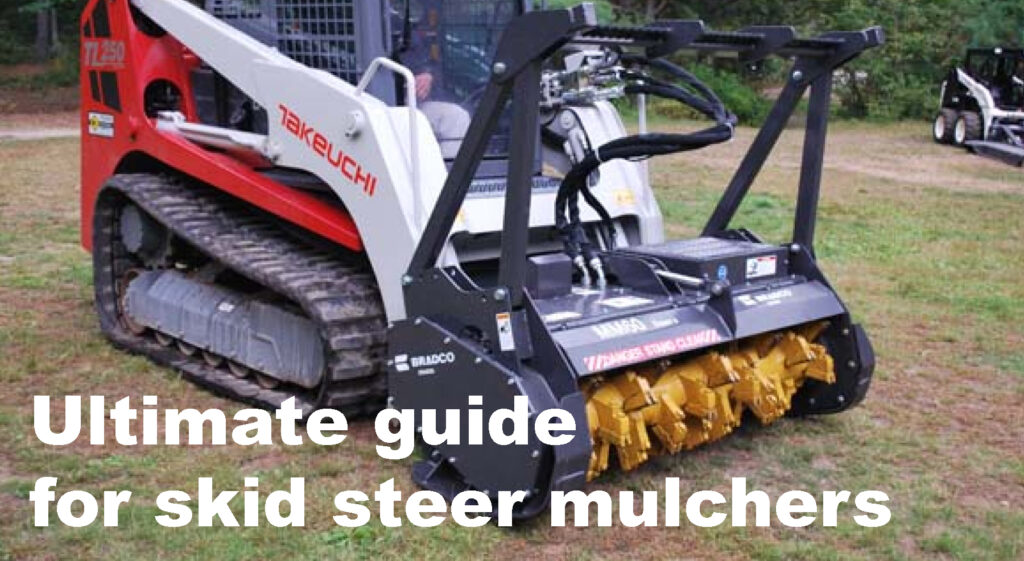

Drum mulchers require a high-flow skid steer and auxiliary hydraulics capable of sustained pressure and volume.