1. This guide provides detailed technical information for bucket attachments used with mini skid steer loaders, including standard, multipurpose, grading, 4-in-1, grapple, and high-capacity designs.
It explains:
Design and structure
Hydraulic and mechanical systems
Bucket types and their uses
Operating procedures and performance parameters
Inspection, maintenance, and troubleshooting
Safety and storage guidelines
The intent is to help operators and maintenance technicians select, operate, and service mini skid steer buckets safely and efficiently.
2. SYSTEM OVERVIEW
Mini skid steer buckets are mechanical or hydraulic attachments that allow compact loaders to perform various earthmoving and material-handling tasks such as digging, grading, backfilling, leveling, loading, and carrying.
They mount to the machine via a universal mini-skid quick-attach plate, compatible with leading brands (Toro Dingo, Bobcat MT, Vermeer, etc.).
Each bucket design varies in:
Capacity and shape (for different materials and ground conditions)
Hydraulic hose size and coupler rating must match flow and pressure to prevent line burst or heat buildup. Always check directional flow before first use.
6. OPERATIONAL GUIDELINES
Pre-check: Ensure attachment pins, hoses, and couplers are secure.
Connect couplers with the machine shut down and hydraulics depressurized.
Start engine and test curl and dump motions before loading.
Always approach material pile with the bucket level to the ground.
Apply smooth control when curling or lifting — avoid jerky motions.
Do not exceed the loader’s rated operating capacity (ROC).
For 4-in-1 or grapple buckets:
Keep bystanders clear of the clamping area.
Do not clamp or crush against immovable objects.
When dumping, tilt gradually to avoid sudden load release.
For grading, use float mode (if equipped) for even surface control.
7. INSPECTION & MAINTENANCE
7.1 Daily / Pre-Use
Check
Purpose
Inspect cutting edge and teeth
Detect wear or bending early.
Check weld seams and side plates
Identify cracks or fatigue.
Verify quick-attach pins and locks
Ensure secure coupling.
Inspect hydraulic hoses (if fitted)
Prevent leaks or abrasion.
Grease all pivot points
Reduce friction and extend life.
7.2 250-Hour / Periodic Service
Task
Description
Replace worn cutting edges or teeth.
Torque all bolts and mounting fasteners.
Replace worn pivot pins or bushings (4-in-1).
Clean hydraulic couplers and test flow direction.
Repaint exposed metal to prevent corrosion.
7.3 Annual / Major Service
Task
Description
Replace hydraulic hoses if cracked or frayed.
Replace cylinder seals if leakage occurs.
Inspect structural welds via dye-penetrant test.
Verify fitment tolerances at attachment plate.
Check and calibrate auxiliary hydraulic relief valves.
8. WEAR PARTS
Part
Material
Service Interval
Cutting edge
Heat-treated 400HB steel
Replace at 50% wear.
Teeth
Forged alloy steel
Replace individually as needed.
Bushings
Hardened steel or bronze
Replace annually or when excessive play occurs.
Hydraulic cylinder seals
Nitrile or Viton
Replace if leakage or reduced pressure.
9. TROUBLESHOOTING
Symptom
Likely Cause
Corrective Action
Poor digging or grading
Dull cutting edge or incorrect angle
Replace edge; adjust tilt.
Bucket won’t clamp/open (hydraulic models)
Air in system or low flow
Bleed lines; check couplers.
Hydraulic leak
Damaged hose or seal
Replace damaged components.
Uneven dumping
Bent side plate or twisted frame
Inspect and straighten; weld repair.
Quick-attach won’t lock
Worn latch pins or debris in slot
Clean or replace pins.
10. SAFETY INFORMATION
Only trained operators may use bucket attachments.
Always stay within rated lifting and tipping loads.
Keep bystanders away from the loader’s working area.
Never travel with the bucket raised higher than mid-lift height.
Do not use bucket edge or teeth as a lever or hammer.
Avoid striking fixed obstacles at full speed.
Disconnect hydraulic lines only after pressure relief.
Use PPE: gloves, boots, eye protection, and hearing protection in noisy sites.
11. STORAGE & TRANSPORT
Condition
Instruction
Short-Term
Store bucket clean and dry, edge facing down on wooden blocks.
Long-Term (>3 months)
Grease pivots, oil hydraulic rams, and cover from weather.
Transport
Secure with chains through lifting eyes or brackets; ensure bucket is empty.
12. MAINTENANCE RECORD TEMPLATE
Date
Technician
Hours
Model
Observations
Action Taken
13. TECHNICAL SUMMARY
Category
Specification
Attachment Type
Mini Skid Steer Bucket
Mount Type
Mini-Universal Quick-Attach
Operating Widths
900 – 1500 mm typical
Bucket Capacity
0.06 – 0.20 m³
Hydraulic Flow (if equipped)
20 – 60 L/min
Operating Pressure
100 – 180 bar
Material
High-strength welded steel (400HB edge)
Lubrication
Lithium grease at all pivots every 10 hours
Service Interval
250-hour check; annual overhaul
Noise Level (hydraulic)
<85 dB
Standards Compliance
ISO 4413, ISO 12100, CE-Machinery Directive
Mini skid steer buckets are among the most versatile and essential attachments for compact loaders. Correct selection, careful operation, and scheduled maintenance ensure maximum performance, minimal wear, and extended service life in all construction and landscaping environments.

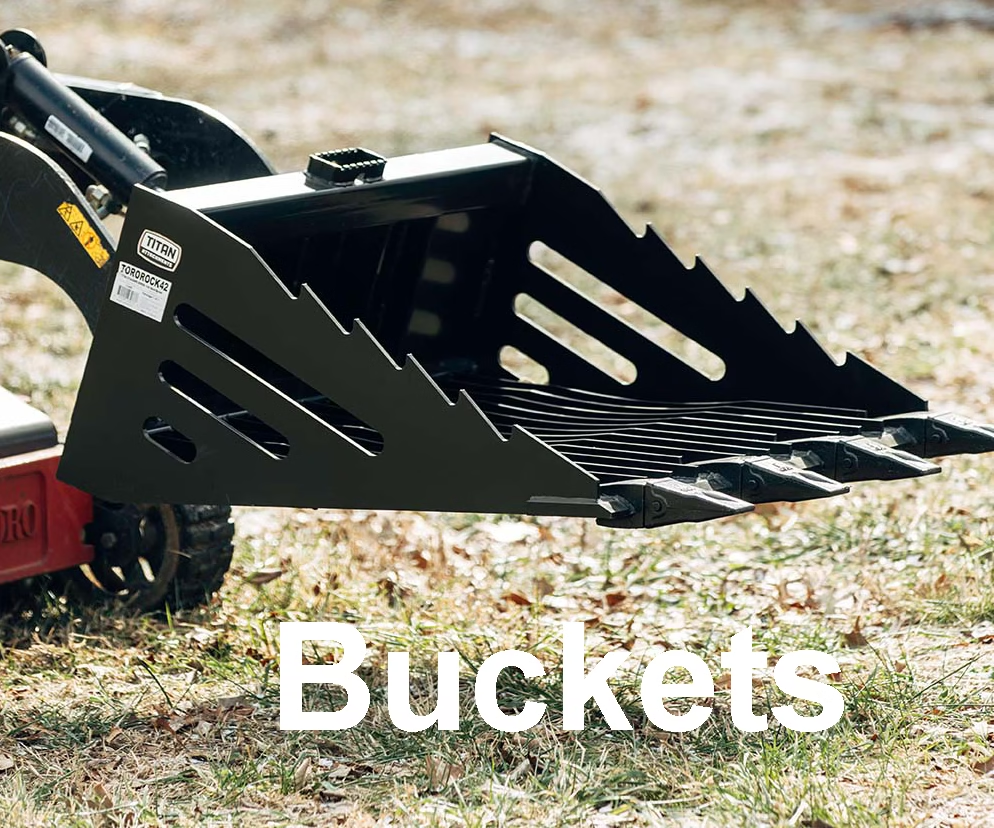


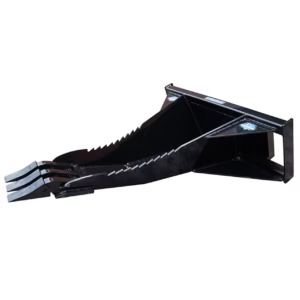
Always choose the bucket type based on material density, ground conditions, and loader capacity to avoid tipping or overloading.