
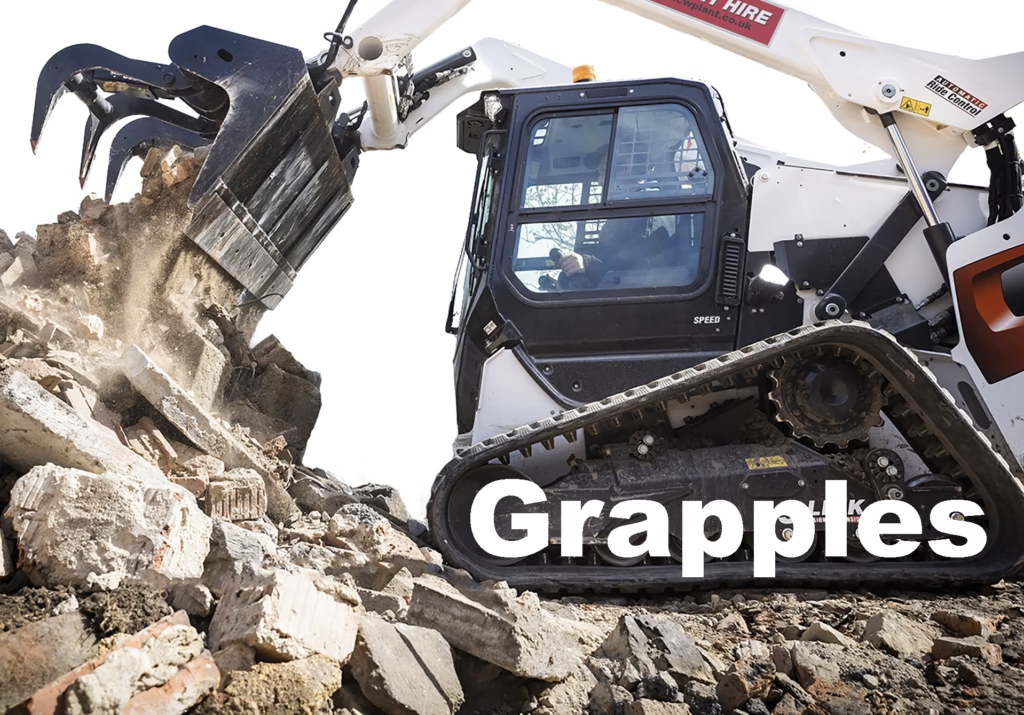
-
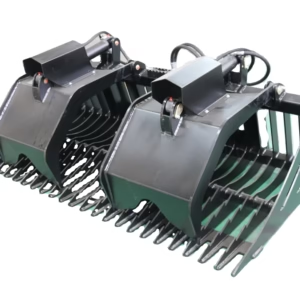
Double Tine Grass Grapple Bucket Attachment for skid steer loader
Price range: £1,990.00 through £2,440.0060" - 84"Select options This product has multiple variants. The options may be chosen on the product page
Weight (Kg) 480 - 652
Semi Professional
MAKE-Contract -
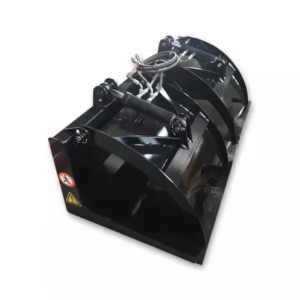
Grapple Bucket Attachment for skid steer loader
Price range: £1,580.00 through £1,760.0060" - 72"Select options This product has multiple variants. The options may be chosen on the product page
Weight (Kg) 360 - 475
A Grade
MAKE-Contract -
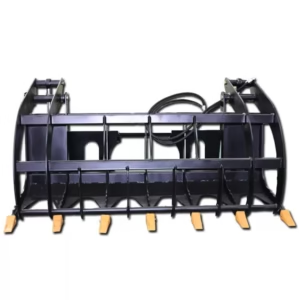
Grapple Rake Attachment for skid steer loader
Price range: £1,790.00 through £2,380.0060" - 84"Select options This product has multiple variants. The options may be chosen on the product page
Weight (Kg) 480 - 652
A Grade
MAKE-Contract
1. Overview
Grapple attachments transform skid steer loaders into powerful tools for gripping, lifting, and moving bulky or irregular materials. They’re used across industries including:
- Land clearing
- Forestry
- Demolition
- Recycling
- Agriculture
The type of grapple selected should match the task, material type, and hydraulic capabilities of the host machine.
2. Types of Grapples
| Grapple Type | Description |
|---|---|
| Root Grapple | For handling roots, brush, and loose debris. Features wide jaw openings and open bottoms. |
| Rock Grapple | Built with reinforced frames and closely spaced tines for rocks and heavy debris. |
| Log Grapple | Designed to lift and rotate logs. Often includes curved arms and high capacity. |
| Scrap Grapple | Features fully enclosed jaws for containing loose, jagged scrap materials. |
| Multi-Purpose Grapple | Combines root and scrap features. Suitable for general material handling. |
3. Mounting & Hydraulic Compatibility
3.1 Mounting System
- Universal Quick Attach Plate: Standard on full-size skid steers.
- Mini Skid Steers: May require smaller or custom mounting interfaces.
3.2 Hydraulic Requirements
| Type | Flow Range (GPM) | Pressure (PSI) |
|---|---|---|
| Standard Grapples | 10–25 GPM | 2,500–3,500 PSI |
| High-Flow Models | 26–40+ GPM | 3,500–4,000 PSI |
- Dual hydraulic cylinders are common.
- Some models require case drain lines—check manufacturer specs.
4. Key Components
| Component | Function |
|---|---|
| Upper & Lower Jaws | Clamp material securely; may have serrated or replaceable edges. |
| Hydraulic Cylinders | Power the opening and closing of grapple jaws. |
| Tines / Teeth | Penetrate and support material. Spacing and shape vary by use case. |
| Mounting Frame | Connects to skid steer and transfers hydraulic and structural load. |
| Pivot Pins & Bushings | Enable smooth jaw articulation; require regular lubrication. |
5. Operation Guidelines
5.1 Setup
- Attach grapple to skid steer’s quick-attach plate.
- Connect hydraulic hoses securely (match coupler types).
- Engage auxiliary hydraulics briefly to confirm jaw response.
5.2 In-Use Operation
- Position grapple above material with jaws open.
- Lower onto the load and close jaws slowly and evenly.
- Lift and transport with the load kept close to the ground for stability.
- Use feathering (partial hydraulic engagement) for delicate gripping.
6. Safety Protocols
- Always wear PPE: steel-toe boots, gloves, hearing and eye protection.
- Keep bystanders and coworkers clear of grapple operating zone.
- Avoid lifting over cab height, especially with unstable or rolling material.
- Shut down and relieve hydraulic pressure before service or inspection.
- Use lockout/tagout when replacing teeth, pins, or cylinders.
7. Maintenance Schedule
| Task | Frequency |
|---|---|
| Inspect hydraulic hoses & fittings | Daily |
| Lubricate all pins and bushings | Every 8–10 hours |
| Check cylinder seals for leaks | Weekly |
| Inspect jaw wear or damage | Every 10 hours |
| Tighten hardware & frame bolts | Weekly |
| Replace worn teeth or tines | As needed |
Use lithium-based grease and OEM-specified hydraulic fluid.
8. Common Use Cases
- Forestry: Moving logs, brush, and stumps.
- Demolition: Removing debris, handling concrete and scrap.
- Landscaping: Clearing overgrown areas or root balls.
- Farming: Handling silage, manure, or hay bales.
- Scrap Yards: Loading and sorting scrap metal or recycled materials.
9. Selection Checklist
 Match hydraulic flow & pressure to your skid steer specs Choose grapple type based on your dominant use case Confirm coupler compatibility (1/2″ flat-face standard) Opt for reinforced frames if operating in rocky or abrasive conditions Check for replaceable teeth and grease points for serviceability