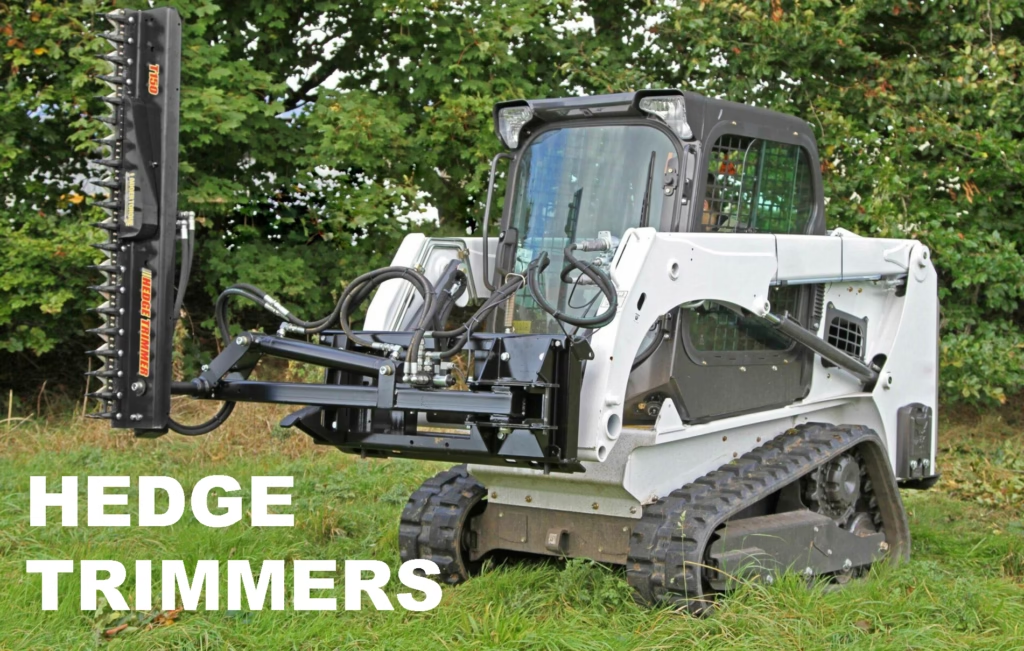
Hedge trimmer attachments for full-size skid steer loaders are hydraulically powered tools designed for high-efficiency trimming of hedges, shrubs, brush, and small limbs. They offer extended reach, clean cuts, and significant time savings over handheld trimmers—ideal for large-scale commercial and municipal landscaping tasks.
2. Common Applications
Trimming tall and wide hedges
Shaping large shrubs and ornamental trees
Clearing overgrowth along roads, trails, and fences
Maintaining landscaping in parks, estates, and sports grounds
Pruning orchard rows and vine foliage
3. Compatibility
3.1 Mounting System
Mount Type
Details
Universal Quick Attach
Standard across most full-size skid steers
Custom Tilt Frames
Optional add-on for enhanced reach and angle
3.2 Hydraulic Requirements
Parameter
Typical Range
Flow Rate
10 – 25 GPM
Operating Pressure
2,000 – 3,500 PSI
Coupler Type
½″ Flat Face (ISO 16028)
Case Drain
Not usually required
Always confirm hydraulic compatibility between skid steer and attachment.
4. Key Components
Component
Function
Cutting Head / Blade
Bar-style or saw-style; performs cutting of vegetation
Hydraulic Motor
Converts hydraulic flow to blade movement
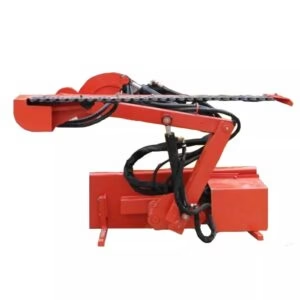
Swivel or Tilt Mount
Allows trimming at different angles and positions
Blade Guard / Deflector
Protects operator and surroundings from debris
Mount Frame
Attaches to the skid steer’s quick-attach system
5. Blade Options
Blade Type
Use Case
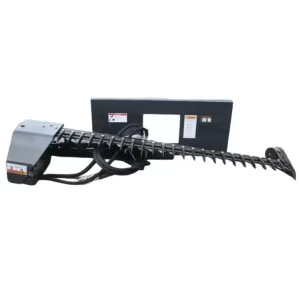
Dual-Action Bar Blades
Clean cuts on hedges and shrubs (less vibration)
Circular Saw Blades
Dense brush, light limbs, and overgrowth
Blade Length
Best Use
60″ – 84″
General hedge work, field edges
84″ – 120″+
Long hedges, roadsides, tall trees
6. Operation Guidelines
6.1 Setup
Securely attach hedge trimmer to the skid steer’s quick attach plate
Connect hydraulic lines to the auxiliary couplers
Test blade function at low RPM to ensure smooth operation
Adjust angle manually or hydraulically (if tilt/swivel equipped)
6.2 Best Practices
Keep consistent trimming height and angle along hedges
Avoid forcing the blade through dense material—let it cut naturally
Adjust angle for vertical or overhead trimming (with tilt head)
Stop operation if blade RPM drops or machine bogs down
Frequent cleaning of blade and guard ensures continued performance and safety.
Clear the area of people, animals, and vehicles within 15–20 feet
Never touch the blade while connected to hydraulic power
Operate only on level, stable terrain
Turn off engine and relieve pressure before blade inspection or maintenance
8. Maintenance Schedule
Task
Frequency
Inspect blades and hardware
Before each use
Clean blade housing and guard
After each use
Lubricate moving joints
Every 8–10 hours
Check hydraulic fittings
Daily
Sharpen or replace blades
As needed
9. Technical Specifications (Typical Range)
Specification
Value
Blade Length
60″ – 120″+
Max Cutting Diameter
1.5″ (bar); 2–4″ (saw)
Hydraulic Flow Required
10 – 25 GPM
Operating Pressure
2,000 – 3,500 PSI
Weight (attachment only)
300 – 600 lbs
Noise Output (avg.)
85 – 105 dB
10. Selection Tips
Match hydraulic flow of the trimmer to your skid steer’s auxiliary specs Choose longer blades for large hedge runs or overhead reach Prefer dual-action blades for fine trimming, circular saws for thick brush Look for angle-adjustable frames for trimming fence lines or slopes Ensure easy blade access for sharpening or replacement in the field

 Match hydraulic flow of the trimmer to your skid steer’s auxiliary specs