
-

1 Ton Electric Excavator E1000X
Price range: £6,640.00 through £7,340.00 Select options This product has multiple variants. The options may be chosen on the product page -
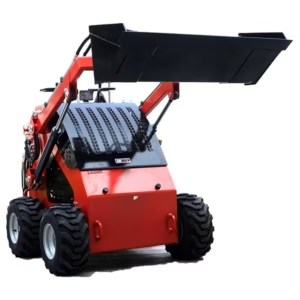
Electric Mini Skid Steer Loader
Price range: £8,200.00 through £9,700.00 Select options This product has multiple variants. The options may be chosen on the product page -
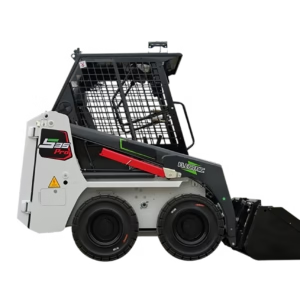
Electric Skid Steer Loader STXE350
£21,900.00Weight (Kg)Order Now
Semi Professional
MAKE-Auger Torque
Electric Micro Excavators/Mini skids
What they are & key use‑cases
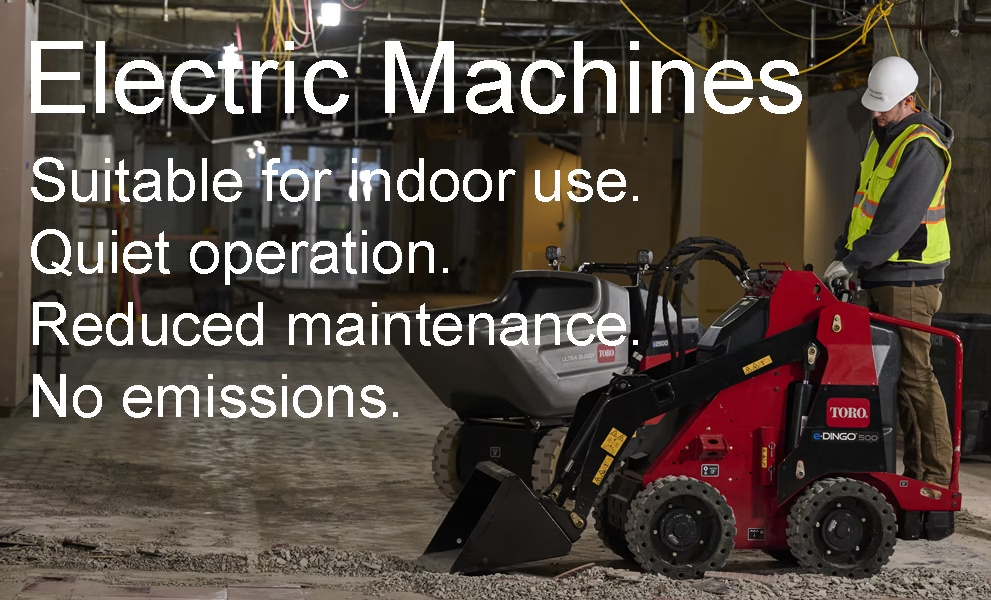
A “micro excavator” typically refers to an excavator in the sub‑1 tonne to ~2 tonne class (sometimes up to ~3 tonnes) designed for very tight spaces. With electric drive (battery + electric motor + hydraulic systems) these machines bring benefits of zero tail‑pipe emissions, lower noise, simpler ancillary systems (no fuel tank, exhaust), and possibly lower vibration.

8
Core technical systems
a) Power / Drive system
- The main drive is electric: a high‑voltage battery (often lithium‑ion or LiFePO₄) supplies an electric motor or motors which drive hydraulic pumps (or in some designs directly drive hydraulics) for boom/arm/bucket and tracks or wheels. For example, the electric mini excavator “19C‑1E” from JCB has a quick‑start guide tailored to its electric version.
- Charging: Depending on battery size and charger setup, full charge times vary. Some general guidance for electric skid‑steer loaders (similar principle) indicates 8‑12 hours on a standard outlet, or 4‑6 hours with dedicated station, or even 1‑2 hours with fast charger.
- Battery capacity / runtime: For example a skid‑steer variant shows 4‑8 hours runtime for its battery pack.
- Energy savings: One example claims that an electric skid‑steer loader uses ~6 kWh at 80% power vs ~5 litres/hour of petrol for same workload.
- Typical mechanical configuration: tracks (or sometimes wheels) for the undercarriage, hydraulic system for boom/arm/bucket/rotation of house.
b) Hydraulic and motion systems
- Excavator hydraulics: boom/arm/bucket cylinders, swing motor, house rotation bearing, track motors. For compact machines, hydraulic efficiency is key.
- For electric machines, the hydraulic pump is driven by the electric motor rather than a diesel engine.
- Quick‑start/installation guides for micro excavators emphasise hydraulic systems and safe charging/operation.
- Track/undercarriage: compact machines often have retractable tracks (to reduce transport width) and zero‑tail or minimal tail swing designs for tight spaces. Example: the micro excavator with 71 cm retracted track width.
c) Control & ergonomics
- Operator cabin / platform: may include joystick controls for boom/arm/bucket, foot pedals or hand levers for travel. Electric machines often have data monitoring (battery state, diagnostics) built‑in.
- Safety: Because electric machines may operate indoors or in noise‑sensitive environments (zero emissions, lower noise) special emphasis on ventilation, battery safety, emergency stop.
- Handover/quick start guides: For example JCB’s electric mini excavator quick guide covers electric machine operation & charging.
Key advantages & constraints
Advantages:
- No local emissions (good for indoor or urban use)
- Lower noise (less disturbance)
- Possibly lower maintenance (no fuel engine, fewer fluids)
- Good manoeuvrability in tight spaces
Constraints:
- Battery runtime (need to plan re‑charging)
- Charging infrastructure – need appropriate charger, power supply
- Initial cost may be higher vs diesel equivalent
- Battery replacement cost & lifecycle to consider
- Possibly less “grunt” than larger diesel machines (depending on model)
Operational / maintenance best practices
- Pre‑operation: check battery state‑of‑charge, inspect cables/connectors, ensure charger connections are good.
- Environmental check: ensure work area has access to adequate charging supply; plan for downtime.
- Daily inspection: tracks/undercarriage, swing mechanism, hydraulic hoses, boom/arm pins.
- Monitor battery health: ensure service regime for the battery as per manufacturer.
- Safe charging: Use correct charger; follow manufacturer guidelines (some machines have fast‑charge capability)
- Worksite planning: if battery runtime say 4‑8 hours, plan for swap or recharge interval.
- Training: operators must understand differences from diesel machines (e.g., instant torque, electric motor response, safe handling of high‑voltage systems).
- Maintenance schedule: hydraulic oil/service, tracks, bolts, pins, electric drive components.
- Storage: If machine idle for long period, follow manufacturer battery storage recommendations (e.g., keep battery at partial charge, temperature range).
Spec / purchase checklist
When evaluating an electric micro excavator (and using it for purchase/selection), check:
- Machine weight & transport dimensions (can you transport easily?)
- Track width (retractable?)
- Dig depth / boom reach / bucket capacity – matches your job site requirements
- Battery capacity (kWh) and expected runtime / shift time
- Charging time and charger type (standard outlet vs dedicated charger vs fast charger)
- Speed/travel performance (ground speed)
- Hydraulic flow/pressure – ensure it meets attachment requirements
- Attachments compatibility (e.g., buckets, augers, thumbs)
- Service network and parts availability for electric drive system
- Total cost of ownership: battery replacement cost, energy cost vs diesel fuel, maintenance cost
- Noise/emission spec if you’ll use indoors or urban/regulated environment
A relevant related product example: CE EPA E1000x Micro Mini Electric Excavator (1 tonne class small‑electric excavator)
Also: 800 kg Micro Digger 0.8 Ton Lithium Battery Electric – ultra‑compact electric crawler micro excavator.
2. Electric Mini Skid‑Steer Loaders
What they are & key use‑cases
A “mini skid‑steer loader” is a small loader (wheeled or tracked) designed for versatility in tight spaces — loading, material handling, attachments (brooms, buckets, forks). When electric, these machines deliver zero emissions and low noise for indoor/urban/facility use.

8
Core technical systems
a) Power / Drive system
- The electric skid steer uses battery + electric motors to drive the wheels/tracks (typically skid‑steer style steering) and hydraulic pump(s) for attachments. Example: the Kovaco Elise 900 states 100% electric, up to 8 hours on single charge, zero environmental impact.
- Hydraulic specs: Example hyd oil flow 65 l/min at 180 bar for one model.
- Charging times: As above, depends on charger infrastructure.
- Machine width: Example very compact width 77 cm for an electric skid steer loader (for indoor/facility use) in the “Minibuilder” model.
b) Hydraulic & attachments
- Loaders are versatile – numerous attachments (buckets, forks, sweepers, augers) and the hydraulic system must support them.
- The electric design must ensure hydraulic pump driven reliably by the electric motor, suitable hydraulic flow/pressure to attachments. Example: wheel‑edge electric drive, instantaneous torque.
- Standard attachments: Many electric skid‑steer manufacturers supply a broad range (e.g., Kovaco lists ~30 attachments).
c) Control & ergonomics
- Operator cab or stand‑on platform. Electric versions emphasise low noise, possibly remote control (for hazardous or indoor use) — example: remote control up to 165 ft for one model.
- Safety features: emergency stop, micro‑speed modes, data monitoring.
- Worksite adaptability: low noise (<69 dB for some models) for indoor use.
Key advantages & constraints
Advantages:
- Zero emissions → ideal for indoor, site with emissions restrictions, nighttime/urban work
- Lower noise → less disturbance, can work in enclosed or noise‑sensitive zones
- Compact size + attachments = high versatility
- Often lower operating cost (electric energy vs diesel/petrol) per hour in some cases.
Constraints:
- Runtime limited by battery capacity – may need shift‑planning or backup machine
- Charging infrastructure needed (dedicated charger, power supply)
- Attachment hydraulic capacity may be less than full‑size machines
- Initial capital cost, battery replacement costs
- Possibly less travel speed/power vs comparable diesel models
Operational / maintenance best practices
- Pre‑operation: battery check, charger connection check, ensure ground is level, tracks/wheels inspection.
- Safety: check blind spots, tipping risk, pinch points (especially since skid‑steer has tight turning). See safety tips for skid‑steer loaders.
- Charge planning: Ensure charger got correct voltage, plan downtime.
- Attachment mounting: Confirm hydraulic fittings, secure attachments.
- Daily walk‑around: inspect wheels/tracks, hydraulic hoses, attachment interface, operator controls.
- Battery care: monitor state‑of‑health, temperature, keep charged but not overdischarged; store according to manufacturer guidance.
- Use indoor/urban advantage: low noise, no exhaust gas means you can operate where diesel might be constrained.
- Maintenance schedule: electric motor drive components, hydraulic pump, filters, tracks or wheels, battery system diagnostics.
Spec / purchase checklist
When evaluating an electric mini skid‑steer loader, check:
- Rated operating capacity (ROC) and tipping load – ensure matches your material loads
- Machine weight & dimensions – especially width for indoor/doorway access
- Battery capacity (kWh) & runtime under expected load
- Charging time and charger type (standard vs fast)
- Hydraulic flow & pressure – compatibility with intended attachments
- Attachment ecosystem – availability of buckets/forks/sweepers etc
- Maximum travel speed and manoeuvrability (skid‑steer turning radius)
- Service/support for electric components (battery, motor, controller)
- Noise/emission specification if you need indoor/urban compliance
- Total cost of ownership: energy costs, battery replacement cost, maintenance cost
3. Comparison: Electric Micro Excavator vs Electric Mini Skid‑Steer Loader
| Feature | Electric Micro Excavator | Electric Mini Skid‑Steer Loader |
|---|---|---|
| Primary function | Excavation / trenching / digging / breakout | Loading, handling, attachments, material movement |
| Typical job‑site use | Trenching, landscaping, site preparation, tight spaces | Site cleanup, materials handling, indoors, attachment‑work |
| Machine motion | Tracks mainly; house rotation, boom/arm/bucket | Wheels or tracks; skid‑steer steering (turn on axis) |
| Attachments | Buckets, augers, thumbs, quick‑couplers | Buckets, forks, brooms, sweepers, etc |
| Runtime concern | Digging load can be heavy; battery still limits time | Material handling may be less intense; but attachments draw hydraulic flow |
| Access & indoor use | Good for indoor if emission/noise constraints, but track machine may damage floor | Excellent for indoor/warehouse/urban due to compact size and wheel/track option |
| Fleet complementarity | Better when digging is core task | Better when versatile material handling is primary |
| Maintenance differences | More boom/arm/cylinder maintenance; battery + hydraulics | More attachment interface, hydraulic pump selection, battery/drive system |
| Choice factors | Dig depth, reach, track width, tail swing | Rated capacity, attachment ecosystem, width/turning radius, indoor access |
4. Key Technical Deep‑Dives
4.1 Electric Drive & Battery Systems
- Battery types: Lithium‑ion (Li‑ion) or LiFePO₄ are common; older lead‐acid are less ideal for heavy‑duty. For example, a skid‑steer loader example uses lithium iron phosphate.
- Charging infrastructure: As noted, standard outlets may take 8‑12 hours; dedicated chargers 4‑6; fast chargers 1‑2 hours.
- Battery management: machines may include BMS (battery management system) to monitor cell voltage, temperature, state‑of‑charge, health.
- Torque and performance: Electric motors provide instant torque, which is advantageous for hydraulics (quick response). Example: one loader claims instantaneous torque up to 3× traditional loaders.
- Energy consumption & operating cost: Example electric skid steer uses ~3 kWh/hour average vs 4.37 € per hour for petrol equivalent in one study.
4.2 Hydraulic Systems & Attachments
- Hydraulic pump driven by electric motor: pump flow (l/min) and pressure (bar/MPa) determine hydraulic power. Example: ES 3 loader: system working pressure 33.7 MPa, battery capacity 21.29 kWh.
- Attachments: Need to match hydraulic flow/pressure, coupling system, quick‑attach. For excavator: buckets, augers, thumbs; for skid‑steer: forks, sweepers, etc.
- Maintenance: check hydraulic fluid levels, filters, hoses, cylinder wear, coupler integrity.
4.3 Undercarriage / Mobility
- For micro excavators: tracks are common, often retractable width for transport/access. Example: machine with 71 cm track width.
- For loaders: wheels or tracks; skid‑steer turning (pivot) requires good traction, appropriate ground conditions.
- Ensure machine stability: hydraulic cut‑offs, proper load distribution, tipping risk checks. Skid‑steer safety: avoid driving sideways on slopes, keep load low.
4.4 Safety & Operator Considerations
- High‑voltage equipment: proper training for electric‑drive machine operation, emergency procedures (isolating battery, emergency stop).
- Site safety: ensure clear visibility, treat blind‑spots, follow safe transport/movement. Skid‑steer machine safety guidance emphasises blind spots and rollover risk.
- Indoor/urban use: although machine is low‑emission, still need safe ventilation (if enclosed), noise control.
- Charging safety: ensure charger is correctly installed, follow guidelines.
5. Maintenance & Lifecycle Considerations
- Battery lifecycle: number of cycles, capacity fade, replacement cost. Plan for battery end‑life.
- Electric motor/drive: periodic inspection of cables, connectors, cooling (if needed).
- Hydraulic system: intervals for fluid change, filter replacement, cylinder/pin inspection, hose replacement.
- Undercarriage/wheels: tracks, tires/wheels, pivot bearings, greasing.
- Machine diagnostics: electric machines often have onboard diagnostics; monitor alerts, fault codes.
- End‑of‑life disposal: battery disposal/recycling must be considered.
- Operating cost: compare energy cost per hour vs diesel fuel, as seen in one skid‑steer example.
6. Summary & Recommendations
- If your work involves digging/trenching in confined spaces, minimal emissions, indoor use or urban where diesel emissions/noise are constrained → prefer an electric micro excavator.
- If your work involves loading/material handling with many attachments, indoor/warehouse/urban site, need compact versatility → an electric mini skid‑steer loader is a strong option.
- In both cases ensure you evaluate battery/charging infrastructure, hydraulic/attachment capability, site suitability (ground conditions, transport, access).
- Consider total cost of ownership, not just initial purchase: battery replacement, energy cost, maintenance, resale.
- Provide operator training specific to electric machines (high voltage, instantaneous torque, different behaviour vs diesel machines).
- Always inspect site beforehand: for indoor or emission‑sensitive environments electric machines shine; for remote sites without charging infrastructure, diesel machines may still have edge.