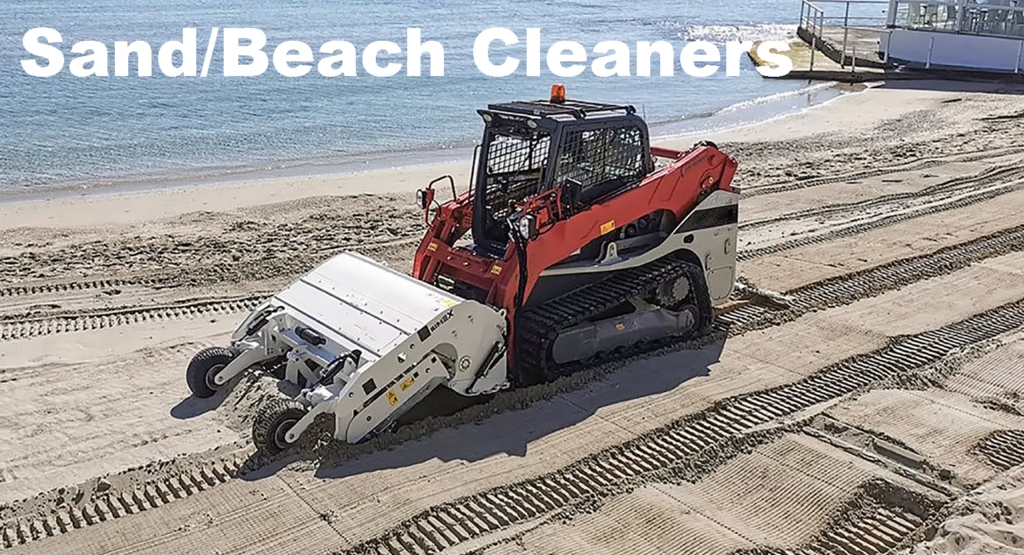
A sand or beach cleaner attachment allows a skid steer loader to clean, sift, and aerate sand surfaces such as beaches, playgrounds, equestrian arenas, and sports fields. These attachments remove debris like litter, shells, glass, rocks, seaweed, and other unwanted materials while leaving the cleaned sand in place.
2. Applications
Public beach and coastal maintenance
Resort and recreational facility upkeep
Cleaning playgrounds, volleyball courts, or equestrian arenas
Post-event sand recovery and waste removal
Environmental restoration and oil spill residue screening
3. Compatibility
3.1 Mounting System
Mount Type
Compatible Machines
Universal Quick Attach
Standard on full-size skid steer loaders
Ensure your machine has the lift capacity for the attachment (typically 800–1,500 lbs).
3.2 Hydraulic Requirements
Some beach cleaners use a hydraulic drive for the sifting drum or conveyor system.
Parameter
Typical Range
Flow Rate
12 – 25 GPM
Operating Pressure
2,000 – 3,000 PSI
Coupler Type
½″ Flat Face ISO
Case Drain
Not typically required
4. Key Components
Component
Function
Sifting Screen / Conveyor
Separates sand from debris using vibrating or rotating screens
Collection Hopper
Holds collected debris for dumping
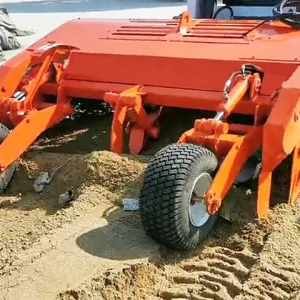
Skid or Roller Wheels
Help control operating depth and reduce drag
Frame & Mount Plate
Connects attachment to skid steer quick attach
Hydraulic Motor (if equipped)
Powers vibratory or rotating parts for enhanced separation
5. Technical Specifications (Typical Range)
Attribute
Value Range
Working Width
60″ – 84″
Depth Control Range
0.5″ – 4″
Hopper Capacity
1.0 – 2.0 cu. yd.
Sifting Screen Size
⅜” to 1″ mesh (adjustable)
Operating Weight
800 – 1,500 lbs
Recommended Skid Steer Size
1,500+ lb ROC (Rated Operating Capacity)
6. Operation Guidelines
6.1 Setup
Attach the cleaner to the skid steer’s quick-attach plate.
Connect hydraulic lines if the system is powered.
Adjust depth skids or gauge wheels for desired working depth.
Test all moving parts before full-scale operation.
6.2 Cleaning Procedure
Drive forward slowly (1–3 MPH) over the sandy surface.
Let the screen or conveyor sift debris from sand.
Monitor hopper fill level and empty as needed.
Overlap passes slightly to ensure full coverage.
Avoid turning sharply with the cleaner engaged to prevent uneven digging.
7. Safety Guidelines
Inspect the work area for large obstacles or sharp buried objects
Wear appropriate PPE including gloves, boots, and eye protection
Keep bystanders and beachgoers away from operating area
Disengage hydraulics and engine before performing inspection or maintenance
Operate at low speeds on uneven terrain to avoid machine instability
8. Maintenance Schedule
Task
Frequency
Inspect sifting screen and rollers
Daily
Check hydraulic hoses and motor
Daily (if powered)
Grease pivot points and bearings
Every 10 hours
Clean hopper and frame
After each use
Inspect frame welds and mounts
Weekly
9. Selection Tips
Choose working width based on site size and machine width Adjustable sifting screen sizes allow flexibility for sand types For deeper cleaning (e.g., after storms), select models with powered sifting Prioritize corrosion-resistant materials (e.g., galvanized steel or powder-coated frames) for salt environments Verify compatibility with skid steer lift capacity and auxiliary hydraulic flow

Ensure your machine has the lift capacity for the attachment (typically 800–1,500 lbs).