
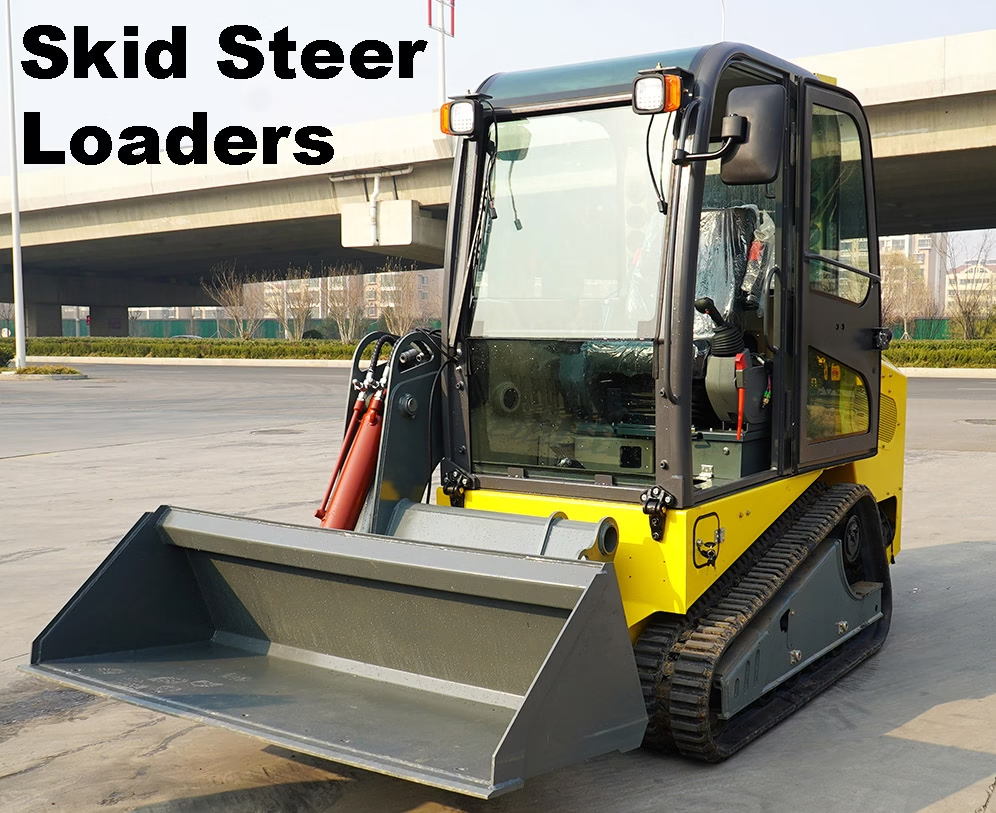
Note: Rated operating capacity (ROC) refers to the maximum weight a machine can safely lift, which is different from the machine’s overall operating weight. Always check the manufacturer’s specifications for exact ROC and tipping load figures, as operating weight can be misleading.
Common features and technical specifications
Medium-to-large frame skid steer loaders are designed for heavier-duty applications and offer more power, lift capacity, and hydraulic performance than smaller models. These are some typical characteristics of 2-to-4-ton models:
- Operating weight: Approximately 2,700–4,000 kg (6,000–8,800 lbs).
- Engine: Diesel engines with a gross power output from 55 kW to 74 kW (74–99 hp).
- Lift and geometry:
- Radial lift: Provides greater forward reach at mid-range heights, ideal for loading flatbed trucks and backfilling.
- Vertical lift: Offers a higher lift height and reach at the top of the lift cycle, which is best for stacking pallets and loading high-sided trucks.
- Undercarriage:
- Wheeled: More maneuverable and faster on hard surfaces like concrete.
- Tracked: Known as compact track loaders, these offer better traction, stability, and flotation on soft, muddy, or uneven ground.
- Hydraulics: Most modern skid steers in this class are available with standard and high-flow hydraulic options. High-flow systems provide the necessary power for demanding, specialized attachments.
- Operator station: Many models come with optional enclosed cabs with heating and air conditioning, ergonomic joystick controls (switchable between ISO and H-patterns), and advanced display monitors.

Versatile attachments
Attachments expand a skid steer’s functionality and are a primary reason for their popularity. For 2-to-4-ton loaders, the available attachments are designed for heavy-duty applications.
- Augers: Used for boring holes for poles, fence posts, and planting trees.
- Backhoes: Converts the loader into a small excavator for digging trenches and holes.
- Buckets: Available in numerous types, including standard, low-profile, and multi-purpose “4-in-1” buckets for digging, grading, and clamping.
- Forks: Pallet forks turn a skid steer into a powerful forklift for moving palletized materials around a job site.
- Grapples: Heavy-duty grapples are used for handling and clearing debris, brush, logs, and other irregularly shaped materials.
- Trenchers: These attachments allow for digging trenches for plumbing, drainage, or electrical conduits.
- Mowers and brush cutters: Heavy-duty brush cutters are ideal for clearing land and controlling overgrown vegetation.
- Snow blades and pushers: Efficient for removing snow from large areas.
Critical safety procedures
The size and power of 2-to-4-ton skid steers necessitate strict adherence to safety protocols to prevent serious injury or death.
- Know your machine: Before operating, read and understand the manufacturer’s manual. Never bypass or modify safety features.
- Three points of contact: Always maintain three points of contact when entering or exiting the cab (two hands, one foot, or two feet, one hand).
- Securely enter and exit: Never enter or exit the loader with the engine running or the lift arms raised. Lower the bucket to the ground, set the parking brake, and shut off the engine first.
- Use safety devices: Always wear the seatbelt and lower the safety restraint bar when operating. Never operate the machine without the Rollover Protective Structure (ROPS) and Falling Object Protective Structure (FOPS) in place.
- Never overload: Always stay within the machine’s rated operating capacity. Overloading can lead to instability and rollovers, which can be fatal.
- Travel with care: Carry loads as low as possible for maximum stability and visibility. On slopes, travel straight up or down, with the heavy end of the loader facing uphill.
- Check the surroundings: Perform a daily walkaround inspection of the machine and the work area, checking for obstacles, people, and uneven ground.
- Avoid the danger zone: Never work under a raised attachment unless the lift arms are secured with approved lift arm supports.
Maintenance and inspection
Proper maintenance is crucial for optimal performance and safety. Adhere to the manufacturer’s service schedule.
- Daily pre-operation inspection:
- Fluid levels: Check engine oil, hydraulic fluid, and coolant.
- Filters: Inspect air filters for clogs and damage.
- Components: Look for visible damage, leaks, or loose parts on the frame, tires/tracks, and hydraulic lines.
- Safety systems: Test the seatbelt, safety interlocks, and backup alarm.
- Regular service intervals:
- Lubrication: Grease all fittings and moving parts as specified in the operator’s manual.
- Hydraulic system: Change hydraulic filters and fluids per the manufacturer’s schedule. Use caution, as hydraulic pressure can be high and dangerous.
- Engine: Follow manufacturer recommendations for oil and filter changes.
- Tires/Tracks: Maintain proper tire pressure or track tension for stability and performance.
- Attachment inspection: Before each use, ensure all attachments are mounted correctly and securely fastened to the coupler.
Operating tips
To maximize productivity and safety, operators should practice proper techniques.
- Smooth operation: Use smooth, deliberate motions when operating controls. Sudden, jerky movements can cause the loader to become unstable, especially with heavy loads.
- Load and unload on level ground: This prevents the loader from tipping and helps maintain an even, secure load.
- Avoid collisions: Be mindful of limited visibility. Always look in the direction of travel, use mirrors and backup alarms, and communicate with ground crews.
- Use hand signals: Establish and use clear hand signals with ground workers to ensure everyone knows the machine’s intended movements.
.