

1. Overview
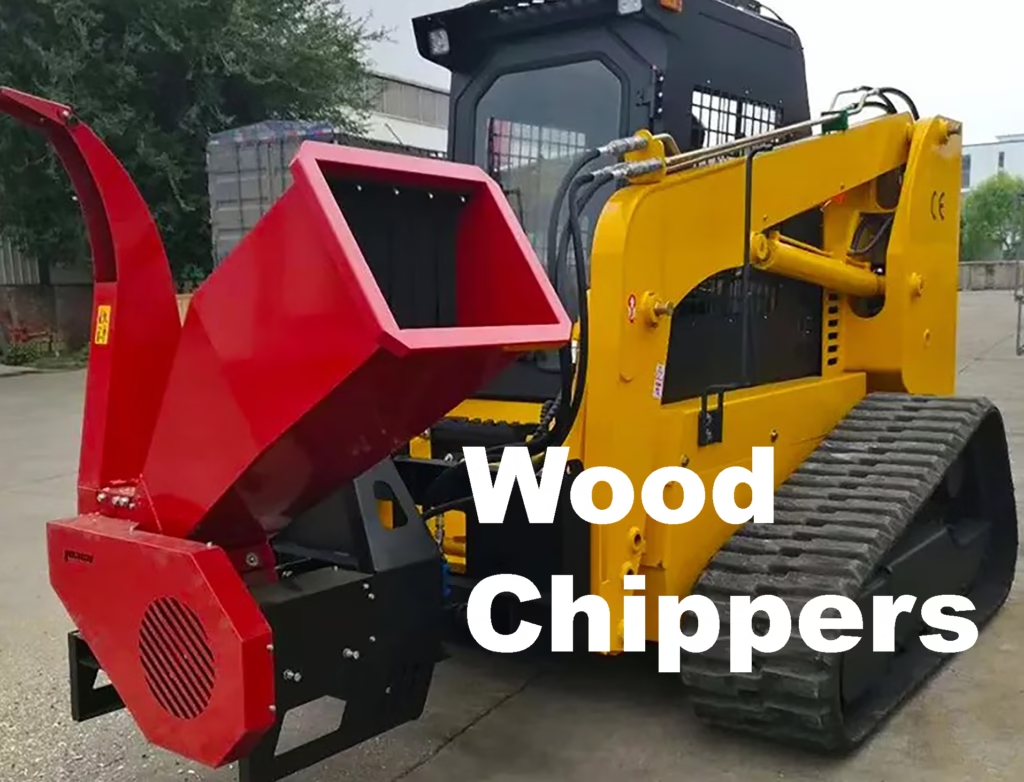
Chipper attachments for skid steers are powerful hydraulic tools used to shred and chip tree limbs, brush, and other wood debris into mulch or transportable material. They are commonly used in land clearing, storm cleanup, municipal maintenance, and forestry operations.
These attachments harness the skid steer’s hydraulic system to power an internal cutting mechanism—either a disc or drum—that rapidly breaks down wood up to several inches in diameter.
2. Primary Applications
- Land and lot clearing
- Forestry thinning
- Storm debris cleanup
- Utility line and roadside maintenance
- Wood waste reduction for composting or mulching
3. Chipper Types
| Chipper Type | Description |
|---|---|
| Disc Chipper | Uses a high-speed rotating disc with knives; ideal for fast, clean chipping |
| Drum Chipper | Uses a rotating drum with fixed knives; generally handles larger, more irregular material |
| Gravity Feed | Relies on angle and gravity to feed material into chipper; best for smaller limbs |
| Hydraulic Feed | Powered rollers actively feed branches; more efficient, especially for bulkier loads |
4. Compatibility
4.1 Mounting
- Standard: Universal Quick Attach Plate
- Orientation: Front-loading (in-line with machine) or offset side-load (better visibility)
4.2 Hydraulic Requirements
| Parameter | Range |
|---|---|
| Hydraulic Flow | 15 – 40 GPM |
| Operating Pressure | 2,500 – 3,500 PSI |
| Case Drain Required? | Often required on high-torque models |
| Coupler Type | ½” Flat Face Quick Connect |
Some heavy-duty chippers may require high-flow skid steers to operate at full capacity.
5. Key Components
| Component | Function |
|---|---|
| Chipping Mechanism | Drum or disc with mounted blades that slice or chip material |
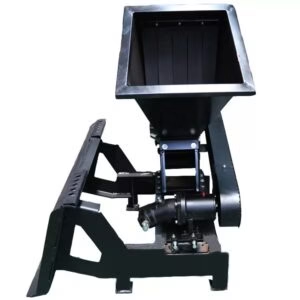
| Feed Chute | Angled opening where branches are inserted |
| Discharge Chute | Ejects wood chips; may rotate or pivot for directional discharge |
| Hydraulic Motor | Drives the drum or disc from the skid steer’s hydraulic system |
| Feed Rollers (if hydraulic) | Pull material into chipper for consistent processing |
| Protective Guards | Shield operator and bystanders from debris and moving parts |
6. Operation Guidelines
6.1 Setup
- Mount the chipper securely to the skid steer’s quick-attach plate.
- Connect hydraulic lines (ensure correct flow direction and clean couplers).
- Confirm drum/disc spins in the correct direction before inserting material.
- If equipped, test feed rollers or directional chute rotation.
6.2 Chipping Procedure
- Feed branches butt-end first into the chute.
- Avoid forcing or compacting material—let the chipper pull it naturally.
- Only feed branches within rated diameter (e.g., 4″–8″ depending on model).
- Do not chip treated wood, metal, or foreign debris.
Keep hands and body away from feed chute. Never attempt to push material with your hand or tool while chipper is engaged.
7. Safety Protocols
- Wear PPE: eye protection, gloves, hearing protection, and long sleeves.
- Maintain a clear zone of at least 10 ft around the chipper when in operation.
- Never exceed rated wood diameter for the attachment.
- Always shut off machine and relieve hydraulic pressure before maintenance.
- Inspect chute and discharge for blockages only when power is fully disengaged.
- Follow lockout/tagout procedures if servicing blades or drum.
8. Maintenance Schedule
| Task | Interval |
|---|---|
| Inspect hydraulic hoses & fittings | Daily |
| Check blade sharpness | Daily or every 10 hours |
| Grease bearings and moving parts | Every 8–10 hours |
| Clean discharge chute | After each use |
| Inspect safety guards and shields | Weekly |
| Tighten blade mounting bolts | Weekly |
| Replace or rotate blades | As needed (based on wear) |
Dull blades reduce efficiency and increase stress on the hydraulic system—maintain sharpness for best results.
9. Technical Specifications (Typical Ranges)
| Specification | Range |
|---|---|
| Wood Capacity | 4″ – 8″ diameter |
| Drum/Disc Diameter | 18″ – 30″ |
| Flow Requirement | 15 – 40 GPM |
| Operating Pressure | 2,500 – 3,500 PSI |
| Weight | 600 – 1,200 lbs |
| Feed Type | Gravity or Hydraulic |
| Discharge Distance | Up to 20 ft (with high-speed disc) |
10. Selection Tips
 Choose a disc chipper for clean cuts and higher discharge velocity Opt for a drum chipper when processing irregular or dense branches Select a hydraulic feed model for professional or high-volume work Verify that your skid steer’s hydraulic GPM and PSI match the chipper’s needs Consider a rotating discharge chute for easier chip pile control