
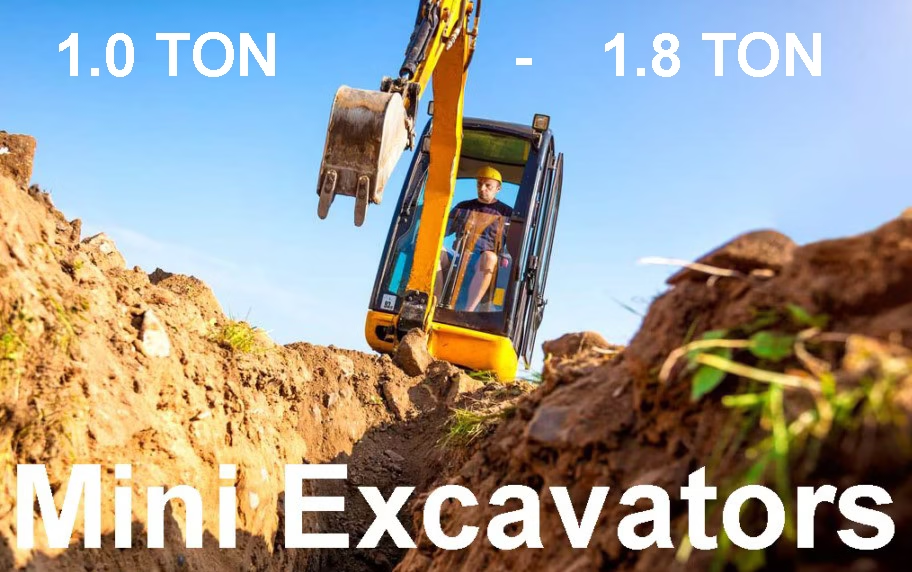
-
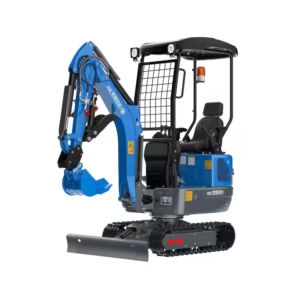
1 Ton Excavator/Digger R10
£4,450.00 – £5,840.00Price range: £4,450.00 through £5,840.00 Select options This product has multiple variants. The options may be chosen on the product page -
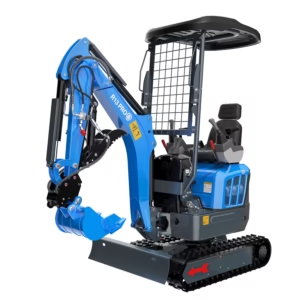
1.3 Ton Excavator/Digger R13PRO
£8,380.00 Order Now -
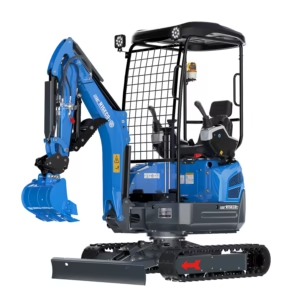
1.5 Ton Excavator/Digger R15
£8,380.00 Order Now -
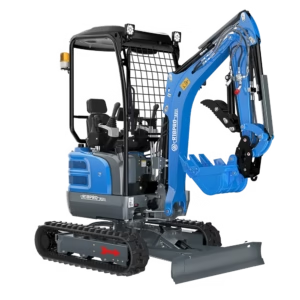
1.8 Ton Excavator/Digger R18PRO
£10,980.00 Order Now
1. Overview
Micro diggers are the smallest category of tracked hydraulic excavators, designed for tight-access worksites, landscaping, utilities, and small-scale construction. They balance compact size with sufficient digging and lifting performance for light civil engineering tasks.
Operating Weight: 1000–1,800 kg
Width: 700–1,000 mm (often retractable undercarriage)
Dig Depth: 1.5–2.1 m
Dump Height: 1.8–2.3 m
Max Reach: 2.8–3.6 m
Engine Power: 7–16 hp (5–12 kW) diesel or electric
Auxiliary Flow: 16–25 L/min (hydraulic tools)
2. Applications
Utility trenching (water, gas, fibre, EV charging cables)
Fence posts, small foundations, landscaping, tree planting
Light demolition with hydraulic breaker
Indoor works (with electric versions or external power packs)
Loading small skips or trailers
3. Key Components & Systems
A. Undercarriage
Tracks: Rubber (180–230 mm wide); steel rare in this class.
Retractable track frame: 700 mm (narrow) → 1,000 mm (extended). Essential for doorway access and added stability.
Track tensioning: Grease cylinder type. Correct tension critical to avoid de-tracking.
B. Upper Structure
Zero/Short tail swing: Prevents overhang beyond track width, ideal for working beside walls or in confined spaces.
Counterweight: Fixed or bolt-on; heavier counterweights improve stability but raise transport weight.
C. Boom, Arm, and Bucket
Boom swing/offset: ~50–75° left/right for digging along walls.
Buckets:
Trenching: 200–300 mm
General purpose: 400–600 mm
Grading: 800–1,000 mm
Quick hitch: Manual pin or semi-automatic. Must comply with safety regulations.
Breakout force: 6–12 kN (bucket); 3–7 kN (arm).
D. Engine & Powertrain
Diesel: Small 2–3 cylinder Stage V-compliant engines (DOC-only emission control, no DPF).
Electric: Lithium battery pack (2–5 hrs runtime) or tethered electric-hydraulic pack. Suitable for indoor/low-noise work.
E. Hydraulic System
Pumps: Gear pump (single or tandem); some models use variable displacement piston for smoother control.
System pressure: 170–210 bar.
Auxiliary hydraulics (AUX1): 16–25 L/min flow for attachments.
Return-to-tank line: Recommended for breakers to reduce backpressure.
Attachments: Breakers (10–80 kg), augers (75–200 mm bits), flail mowers (light-duty), hydraulic thumbs, tilt buckets.
F. Controls
ISO pattern controls: Standard joystick arrangement.
Proportional AUX control: For smooth operation of grabs/tilt buckets.
Travel: Two-speed (slow/fast) for site manoeuvring.
Safety interlocks: Control lock bar, seatbelt, operator presence switch.
4. Performance Factors
Digging & Lifting
Dig Depth: ~1.8–2.1 m
Dump Height: ~2.0 m (important for tipping into skips/trailers).
Safe Working Load (SWL): Typically 200–250 kg at 2 m radius (with tracks extended). Always consult the load chart.
Stability
Extendable tracks greatly improve side-lift capacity.
Use dozer blade down for added rigidity while digging.
Wide grading buckets and heavy attachments reduce rated lift capacity.
Ground Pressure
Average: 4–6 psi (0.28–0.41 MPa).
Still capable of marking lawns—use ground mats on soft terrain.
5. Transport Considerations
Weight with trailer usually under 3.5 t (car/van towable under many regulations).
Always check local towing laws, licensing, and trailer brake requirements.
Tie-down points are manufacturer-marked—use a minimum 4-point chain/strap system.
Typical transport dimensions:
Length: 2.7–3.0 m
Width (retracted): 700–800 mm
Height: 2.2–2.3 m (with ROPS canopy)
6. Safety & Compliance
ROPS/TOPS: Roll-over/tip-over protection required.
Seatbelt: Mandatory when ROPS/TOPS installed.
Travel alarms and beacons: Often optional but recommended for roadside/residential work.
Lifting: Only via certified lifting eye with rigging included in SWL calculation.
Inspections: Regular safety checks required under PUWER/LOLER (UK/EU) or local equivalents.
7. Maintenance
Daily Checks:
Engine oil, coolant, and hydraulic oil levels
Track tension and wear
Hoses and cylinder seals for leaks
Cooling pack clean of debris
Grease all pivot points
Service Intervals:
50–100 hrs: Grease, fuel filter drain, safety inspection
250 hrs: Engine oil + filter
500 hrs: Hydraulic return filter, fuel filter, final drive oil check
1,000 hrs: Hydraulic oil change, cooling system flush, valve lash (if required)
Wear items:
Rubber tracks: 800–1,200 hrs average (sooner on abrasive ground)
Bucket pins/bushes: dependent on greasing habits
Teeth/edges: replace when worn to avoid structural wear
8. Common Issues & Troubleshooting
| Problem | Likely Cause | Fix |
|---|---|---|
| De-tracking | Incorrect track tension; side-loading | Reset tension, improve technique |
| Slow hydraulics | Clogged filter, low oil, worn pump | Check filters, test system pressure |
| Overheating oil | Continuous breaker use, blocked cooler | Add return-to-tank line, clean cooler |
| Boom drift | Worn cylinder seals or valve leakage | Pressure test, reseal or replace |
| Weak breakout | Dull teeth, low relief pressure | Replace teeth, check relief settings |
9. Buyer’s Checklist
Access width/height (fit through gates/doorways?)
Trailer compatibility (gross weight, ramp SWL, lashing points)
Dig depth & dump height vs job requirements
Load chart capacity with attachments fitted
AUX spec: flow, pressure, return-to-tank, proportional control
Cooling system capacity for breaker/auger duty
Operator comfort: seat, controls, visibility, lighting
Dealer support: service intervals, parts availability, loan machines
Warranty terms (engine, hydraulics, electrics)
Security features: immobiliser, telematics, theft tracking
10. Pros and Cons Summary
Advantages:
Extremely compact → tight access jobs
Easy to transport (often car-towable)
Versatile with wide attachment support
Low fuel use (diesel) or zero emissions (electric)
Simple to operate and maintain
Limitations:
Limited reach, depth, and lift capacity
Small hydraulic oil capacity → prone to overheating under continuous heavy tool use
Slower cycle times vs larger minis
Ground clearance and travel speed limited
Susceptible to instability if overextended