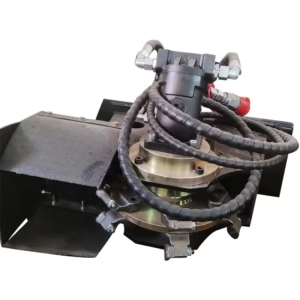
Stump grinder attachments for mini skid steers are compact hydraulic tools designed to grind tree stumps below ground level. These attachments provide efficient stump removal in tight-access spaces or delicate landscapes where full-size equipment cannot maneuver.
2. Primary Applications
Removing tree stumps from residential or commercial landscapes
Clearing stumps in narrow access areas (e.g., backyards, urban spaces)
Preparing sites for turf installation or replanting
Arborist and tree service operations
3. Compatibility with Mini Skid Steers
3.1 Mounting System
Mount Type
Compatibility
Mini Universal Plate
Common for Ditch Witch, Vermeer, Toro Dingo, Boxer, Kanga, etc.
Bobcat MT Interface
Proprietary—may require adapter if attachment uses Mini Universal plate
Confirm that your mini skid steer’s mounting plate matches the stump grinder interface.
3.2 Hydraulic Requirements
Parameter
Typical Range
Flow Rate
8 – 15 GPM
Operating Pressure
2,000 – 3,000 PSI
Couplers
⅜” or ½” flat face
Some models require a case drain line—check attachment specifications before purchase.
4. Types of Mini Stump Grinders
Type
Description
Vertical Axis (Front-Mount)
Mounts in line with loader, grinds with a vertical spinning disc
Swing Arm Type
Arm-mounted disc swings left and right while the operator controls cutting path
Fixed Head (Low Profile)
Compact, non-swinging model for basic shallow grinding in tight areas
5. Key Components
Component
Function
Cutting Wheel
High-speed disc or drum fitted with tungsten carbide teeth for grinding
Hydraulic Motor
Converts skid steer hydraulic flow to drive the cutting wheel
Guard Shield
Protects operator and machine from debris
Mount Frame
Attaches stump grinder to mini skid steer
Teeth (Carbide)
Replaceable teeth used to shred wood during stump grinding
Optional Swing Arm
Allows operator-controlled side-to-side motion for wider cut area
6. Operational Guidelines
6.1 Pre-Operation Setup
Securely mount stump grinder to the mini skid steer’s quick-attach plate
Connect hydraulic hoses (verify correct flow direction and coupler size)
Confirm cutting wheel rotation direction before engaging wood
Adjust wheel height to start slightly above stump level
6.2 Grinding Technique
Position the cutting wheel slightly above the stump surface
Engage the hydraulic flow to start wheel rotation
Lower slowly into stump surface
Use swing or manual motion side-to-side to gradually grind stump
Progress deeper in layers until the stump is ground to the desired depth (typically 4–6 inches below grade)
7. Safety Best Practices
Wear PPE: safety glasses, ear protection, gloves, and steel-toe boots
Maintain a safe work zone (10 ft radius minimum) from bystanders
Never approach the cutting wheel while it’s rotating
Shut off hydraulic flow and relieve pressure before servicing or changing teeth
Be cautious of flying debris—always use protective shields
8. Maintenance Schedule
Task
Frequency
Inspect hydraulic hoses & motor
Daily
Check tooth sharpness & wear
Daily or every 4 hours of use
Grease pivot points
Every 10 hours
Clean debris from wheel guard
After each use
Inspect motor and coupler mounts
Weekly
Replace damaged teeth or fasteners
As needed
Dull or missing teeth reduce performance and can damage the motor—replace regularly.
9. Typical Technical Specifications
Feature
Typical Range
Cutting Wheel Diameter
15″ – 24″
Cutting Depth
Up to 6″ below ground
Hydraulic Flow
8 – 15 GPM
System Pressure
2,000 – 3,000 PSI
Attachment Weight
250 – 500 lbs
Teeth Count
8 – 24 replaceable carbide teeth
Cutting Width
30° – 60° swing path (if equipped)
10. Selection Tips
Match GPM & PSI to your mini skid steer specs Use swing-arm models for smoother, faster stump removal Choose low-profile, fixed-head units for tight-access jobs Prioritize carbide tooth systems for longer-lasting cutting performance Consider models with replaceable shields or debris deflectors for urban/residential work


Confirm that your mini skid steer’s mounting plate matches the stump grinder interface.
Some models require a case drain line—check attachment specifications before purchase.