Select options
This product has multiple variants. The options may be chosen on the product page
1. Overview
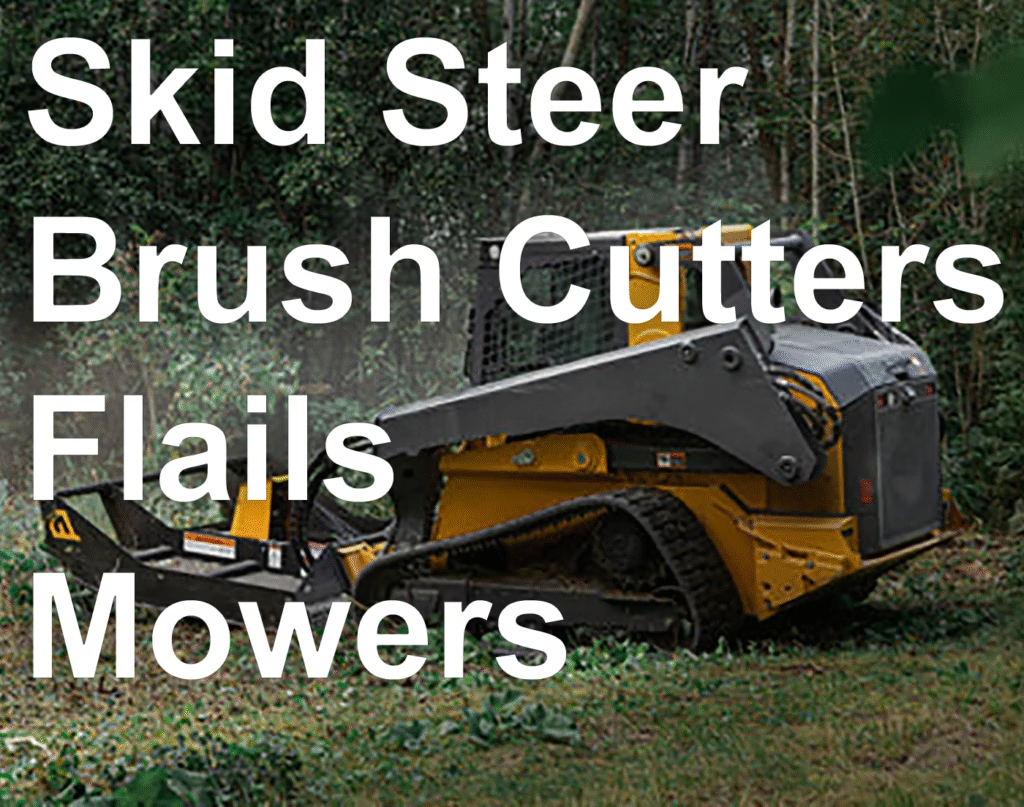
Brush cutter attachments—also called rotary mowers or brush hogs—enable skid steer loaders to cut and clear dense vegetation, tall grass, woody brush, and even saplings. They are essential tools in land clearing, pasture maintenance, municipal work, and utility right-of-way operations.
2. Applications
Clearing overgrown lots
Mowing pasture and tall grass
Trail and roadside maintenance
Fence line and property boundary clearing
Light forestry and sapling removal (with open-front models)
3. Types of Brush Cutters
Type
Best Use
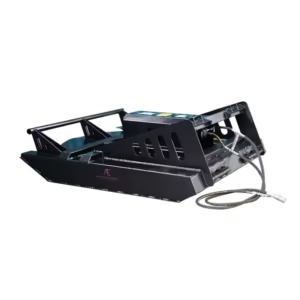
Open-Front Rotary
Saplings, heavy brush—exposes blades for aggressive cutting
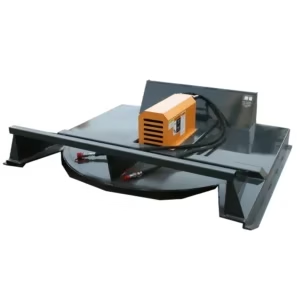
Closed-Deck Rotary
Grass and weeds—fully enclosed for safer operation
Flail Mower
Urban/roadside use—low debris throw, ideal near structures
High-Flow Models
For machines with >25 GPM—cutting dense brush or small trees
4. Compatibility
4.1 Mounting Interface
Uses Universal Skid Steer Quick Attach (SSQA)
Compatible with all full-size modern skid steers (e.g., Bobcat, Cat, Case, Kubota, New Holland, etc.)
4.2 Hydraulic Requirements
Model Type
Flow Range (GPM)
Pressure (PSI)
Notes
Standard Flow
14–22 GPM
2,800–3,200 PSI
Grass and light brush
High Flow
23–40+ GPM
3,000–4,200 PSI
Saplings, heavy brush, small trees
Flail Mower
13–30 GPM
2,500–3,500 PSI
Ideal for finer cutting, low throw
Case drain line may be required for high-flow models.
5. Key Components
Component
Function
Blade Carrier
Rotating disc that spins cutting blades
Cutting Blades
Swinging or fixed blades that cut through brush
Hydraulic Motor
Converts hydraulic flow into blade rotation
Deck Housing
Protects operator and directs debris away
Push Bar (Optional)
Guides material into cutting path (open-front units)
Skid Shoes / Rollers
Maintain proper height and protect the mower deck
6. Technical Specifications (Typical Range)
Attribute
Typical Range
Cutting Width
60″ – 84″
Blade Type
Swinging, fixed, or flail
Max Brush Diameter
2″ (standard) – 6″+ (high flow)
Operating Flow Rate
14 – 40 GPM
Pressure Requirement
2,800 – 4,200 PSI
Attachment Weight
800 – 1,800 lbs
7. Operational Guidelines
7.1 Setup
Attach the brush cutter to the skid steer’s quick attach plate
Connect hydraulic hoses (match coupler types and check flow direction)
Test the cutter briefly to confirm proper motor rotation and no leaks
7.2 Best Practices
Operate at full RPM before entering brush
Move slowly and allow the blades to maintain momentum
For saplings, let the blades engage the base with minimal forward pressure
Keep all bystanders and personnel at least 50 ft away
Never raise the deck while operating
Avoid hitting large rocks or hard objects
Shut off hydraulics and relieve pressure before maintenance
9. Maintenance Schedule
Task
Frequency
Inspect blades for cracks/bends
Daily
Check hydraulic hoses for leaks
Daily
Clean deck and vents
After each use
Grease spindle/pivot points
Every 10 hours
Inspect deck welds and housing
Weekly
Replace worn blades
As needed
10. Selection Tips
Match your skid steer’s hydraulic flow to the cutter’s requirements Choose open-front for saplings; closed-deck for mowing grass Use flail cutters for near-road or residential trimming Verify deck thickness (¼” steel minimum recommended) Select cutters with replaceable skids and serviceable motors


Case drain line may be required for high-flow models.